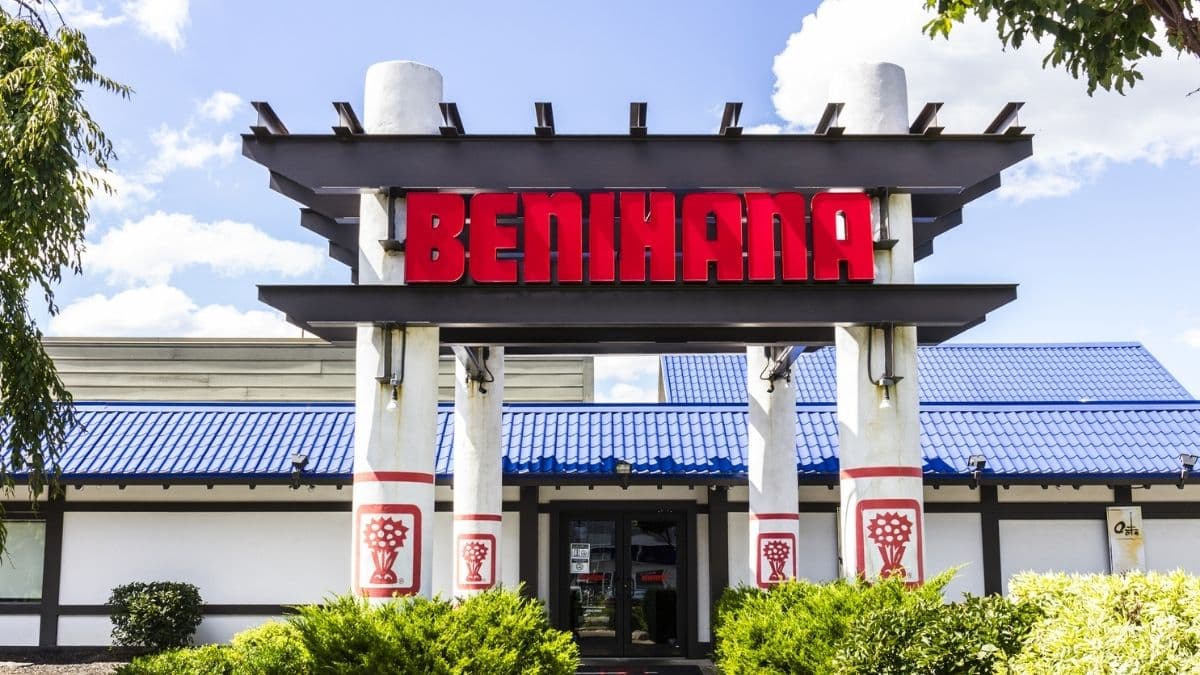
Benihana is one of the best-known Japanese teppanyaki chains in America. Its own About page dates the first restaurant to 1964 in New York City, and states: “From our beginnings as a family business with one Benihana restaurant in New York to our recognition today as a cultural icon with 80 Benihana restaurants in the United States, Caribbean, and Central and South America…” The current group is Benihana, one Samurai restaurant and 12 RA Sushi restaurants.
Answer: yes — and Benihana tells you exactly which items, in writing. It marks seven items vegan on its Lifestyle Menu, under a published definition that excludes honey. This page previously said Benihana “is not transparent regarding its ingredients” and worked the list out by “logic”. That was wrong, and the logic produced four recommendations Benihana’s own data contradicts.
Corrections: what this page got wrong
Every item below was checked against Benihana’s own Allergy Guide (PDF created 16 June 2026, modified 30 June 2026) and its Lifestyle Menu, both fetched 31 July 2026. The allergen grid was read with coordinate-aware extraction and then confirmed cell by cell against a rendered image of each page.
- “Benihana also offers a spicy edamame option which is vegan as well.” Wrong. Spicy Edamame declares DAIRY on Benihana’s own allergen grid, plus Soy and Allium, and a removable Gluten and Fish flag attributed to the spicy tsuyu no moto sauce. It carries no vegan icon and no vegetarian icon. Plain Edamame is the vegan one.
- “Other than the egg, all the other ingredients used in Benihana fried rice are vegan.” Wrong, and it names only half the problem. Vegetable Fried Rice declares DAIRY and EGG (plus Gluten, Soy, Sesame, Allium). Asking for it without egg does not remove the declared dairy. It is also absent from the Lifestyle Menu.
- “Most California rolls are vegan because, by definition, they are vegetables wrapped in sushi and white rice.” Wrong. Benihana’s main menu describes its California roll as “California roll, contains kani kama (imitation) crab“, and the allergen grid gives it EGG, FISH, SHELLFISH and SESAME. Reasoning from a dish name is exactly how this error happened.
- “Benihana offers an excellent spicy tofu steak laced with massive flavors and ingredients, all of which are vegan.” Wrong. Spicy Tofu Steak declares Gluten, Soy and Allium, a removable Shellfish flag (“O – Shrimp app”), and Dairy attributed to the hibachi vegetables. It appears on no published Benihana menu page, only in the allergen guide.
- “The only non-vegan ingredient in yakisoba noodles is an egg.” Wrong twice over. There is no egg flag on any yakisoba row, and there is a dairy flag on all of them. Yakisoba is sold only with chicken, steak or shrimp.
- “It’s hard to tell whether its miso soup is vegan.” It is not hard; Benihana answers it in print. Miso Soup declares FISH (plus Soy and Allium). The Lifestyle Menu marks it gluten-sensitive only — not vegan, not even vegetarian. Its description names only miso, green onion and tofu, which is precisely why the description is not the source to trust.
- “The imperial salad is a new entry into the menu.” No such item exists. “Imperial Salad” returns zero matches across Benihana’s main, lunch, lifestyle and kids menus and both nutrition PDFs.
- “You can order a plate of white or brown steamed rice.” There is no brown rice. “Brown Rice” returns zero matches on every Benihana menu page. The item is “Steamed Rice”.
- “Currently owns 116 restaurants worldwide.” Benihana says 80. The homepage’s own location data contains 80 entries.
- “Haru restaurants.” Haru is not in the current portfolio. It appears on the About page only as a milestone: “1999: Completed acquisition of Haru Sushi restaurants.”
- “Chefs clean the grill after every customer leaves. Therefore… your food can be vegan.” Benihana states no such practice, and says the opposite about the outcome — see the cross-contact section below.
- “Sierra Mist” and a list of branded sodas (Dr Pepper, IBC Root Beer, ginger ale, Pepsi, Diet Pepsi, San Pellegrino). None of these is named on Benihana’s menu; the menu publishes a generic “SODA” line. Sierra Mist is a discontinued PepsiCo brand and has been removed rather than replaced with a guess.
- “Wasabi dressing” listed as a vegan dressing. “Wasabi” returns zero matches on any Benihana menu page.
What Benihana actually publishes
Benihana is one of the better-documented chains in this category. It publishes:
- A Lifestyle Menu with four diet icons — Gluten Sensitive, Keto, Vegan and Vegetarian — applied per item.
- A 2-page Allergy Guide (June 2026) across 13 columns: Fryer Cross-Contamination, Dairy, Egg, Gluten, Fish, Shellfish, Mollusk, Tree Nuts, Peanuts, Soy, Sesame, Pork, Allium. It uses a three-state key: X = contains, O = removable, CC = cross-contamination.
- An 8-page nutrition sheet dated January 2025.
The definitions are the most valuable thing on the site, because an allergen grid can never rule out honey and this one does. Verbatim from the Lifestyle Menu:
“Vegetarian items do not contain meat, poultry, or fish, but may contain eggs, milk, honey, or other animal-derived ingredients; cross-contact with non-vegetarian ingredients is possible. Vegan items do not contain meat, poultry, fish, eggs, milk, honey, or other animal-derived ingredients; cross-contact with non-vegan ingredients is possible.”
One critical scoping point: every vegan claim Benihana makes lives only on the Lifestyle Menu. Its main teppan menu carries zero diet markers on all 85 items. Citing “the Benihana menu” for a vegan claim means citing the wrong document.
The seven items Benihana marks vegan
This is the complete set. Nothing else on any Benihana menu page carries the vegan icon. (It appears as eight marked entries because Edamame is listed twice — once under Appetizers, once under Kabuki Kids Side Orders.)
- Edamame — allergen grid: Soy only.
- Seaweed Salad — Soy, Sesame.
- Benihana Salad — Soy and Allium, both marked removable and both attributed to the ginger dressing. No dairy, no egg.
- Steamed Rice — no row in the Allergy Guide.
- Vegetable Roll — Sesame only.
- Cucumber Roll
- Avocado Roll — the old version of this page missed this one entirely.
Because Benihana’s vegan definition explicitly excludes honey and all other animal-derived ingredients, these seven do not need the usual hedging about sushi rice or dressings. Benihana has already answered that.
Two small inconsistencies in Benihana’s own data, published here rather than smoothed over:
- Vegetable Roll is marked vegan but not vegetarian, while Cucumber Roll and Avocado Roll are marked both. Vegan logically implies vegetarian, so Benihana’s tagging is not self-consistent. Do not read a missing vegetarian tag as meaningful.
- The two documents use different names. The Lifestyle Menu lists Cucumber Roll and Avocado Roll separately; the Allergy Guide and main menu list a single “Avocado Cucumber Roll”. So a plain cucumber roll carries the vegan icon but has not been separately allergen-assessed.
- Benihana Salad is described two ways. The main menu says “in a homemade tangy ginger dressing”; the Lifestyle Menu says “Served with oil and vinegar”. The vegan icon sits on the Lifestyle version.
Items to avoid, in Benihana’s own words
- Miso Soup — Fish, Soy, Allium. Not marked vegetarian either.
- Spicy Edamame — Dairy (non-removable), Soy, Allium; removable Gluten and Fish from the sauce.
- Vegetable Fried Rice — Dairy, Egg, Gluten, Soy, Sesame, Allium. Every other fried-rice row carries the same Dairy + Egg pair.
- California Roll — Egg, Fish, Shellfish, Sesame; the menu says it contains imitation crab.
- Yakisoba (chicken, steak, shrimp or trio) — Dairy, Gluten, Soy, Sesame, Allium, plus shellfish on the shrimp versions.
- Hibachi Vegetables — not an item you can order on its own. They appear in the guide as the reason for flags on other rows: on Spicy Tofu Steak the Dairy cell reads “O – Hibachi Vegetables”. They also account for Gluten, Soy, Sesame and Allium flags on most hibachi entrées.
- Every 5- and 6-course hibachi entrée declares Dairy and comes with a Hibachi Shrimp Appetizer as standard.
- Vegetable Tempura is not a standalone menu item — it appears only inside the Lunch Boat description and as a nutrition-sheet row. It has no Allergy Guide row, so its batter is undocumented. Banana Tempura is on the dessert menu with no description and no Allergy Guide row. The guide’s only tempura row, Shrimp Tempura, carries a Fryer Cross Contamination flag covering dairy, egg, gluten, soy, fish and allium.
Cross-contact: what Benihana says, not what we would like it to say
The old page claimed the grill is cleaned after every customer and concluded that “even if the person they cooked for before you consumed meat, your food can be vegan.” Benihana never says that. What it does say, verbatim:
“Vegan items… cross-contact with non-vegan ingredients is possible.”
“Our Lifestyle Menu highlights dishes that are gluten-sensitive, vegetarian, vegan, or keto-friendly. Look for the lifestyle icons throughout the menu to help guide your choices. Please note that while we take care to minimize cross-contact, our meals are prepared in shared kitchens.“
“PLEASE ALERT THE SERVER OF A FOOD ALLERGY, INTOLERANCE OR OTHER SPECIAL DIETARY REQUEST”
The Allergy Guide also carries a dedicated Fryer Cross-Contamination column. If you are avoiding dairy or egg for medical reasons rather than ethical ones, that shared-kitchen sentence is the one that matters.
Drinks
Benihana’s current “Alcohol-Free Drinks” block publishes: bottled water (Saratoga still and sparkling); Benihana Lemonade in raspberry, mango, strawberry and passion fruit; Red Bull (original, sugar-free, tropical, watermelon); Ramune in lemon-lime, grape and strawberry; a generic Soda line; and freshly brewed iced teas — Benihana “Red Flower” hibiscus blend, passion fruit matcha, green tea and black organic. (The old page listed a peach iced tea; there is no peach.)
None of these has an allergen row, and Benihana makes no vegan claim about any of them, so none can be confirmed either way from a Benihana source. The three smoothies the old page listed — banana berry, mango colada, strawberry passion delight — sit on the main menu under Alcohol Frozen Specialties and likewise have no allergen row.
Scope limits worth knowing
- The June 2026 Allergy Guide covers two menus only: the Drink Book and the Main Teppan menu. Anything sold only on the Lunch, Kabuki Kids, Happy Hour or Seasonal Specials menus is unassessed.
- Spicy Tofu Steak and Vegetable Fried Rice appear in the Allergy Guide but on no current published menu page — the guide has an “off menu” section. Do not treat either as orderable.
- The June 2026 Allergy Guide says Spicy Edamame contains dairy; the January 2025 nutrition sheet gives it 0.0 mg cholesterol. The guide is 17 months newer and is the allergen-specific document, so it governs — but the two documents are not in perfect agreement and you should know that.
Bottom line
Benihana is unusually easy to order at as a vegan, but only if you use the right document. Ask for the Lifestyle Menu, take the seven items it marks vegan, and ignore everything the main menu implies — it carries no diet markers at all. Edamame, seaweed salad, the Benihana salad, steamed rice and the three vegetable rolls are a real, if plain, meal, and Benihana has already ruled out honey and every other animal-derived ingredient in them by its own definition.
Sources
All fetched 31 July 2026: benihana.com/menus/lifestyle/; benihana.com/menus/main/; Benihana Allergy Guide PDF (created 16 June 2026); benihana.com/benihana-nutritional-information/; the January 2025 food nutrition PDF; benihana.com/about. No vegan blog, listicle or aggregator was used.