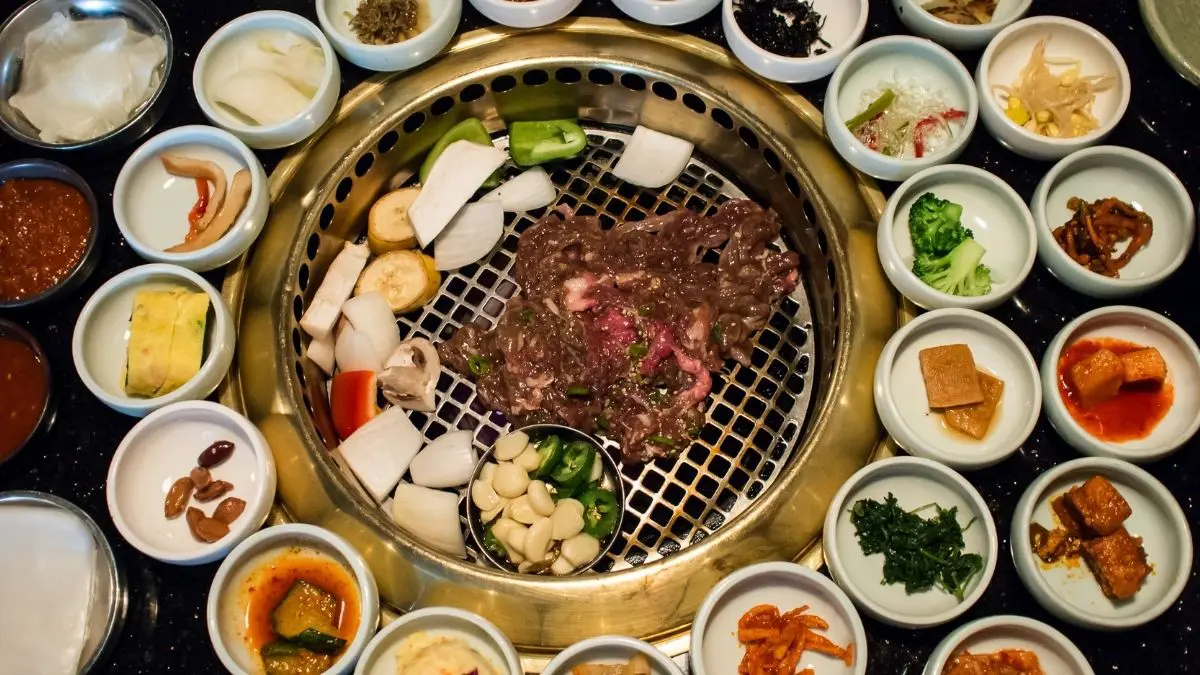
Korean BBQ is a shared meal cooked at the table. A grill sits in the middle, plates of marinated meat come out, and around them arrive banchan — the small refillable side dishes — plus rice, lettuce for wrapping, sauces and often a stew.
Answer: it depends heavily on the restaurant, and there is no way to be sure without asking. Korean BBQ is a cuisine, not a company. There is no brand, no head office and no official allergen guide to check, which means nothing on this page can be confirmed vegan from a source the way a chain restaurant’s allergen chart can be. What we can do is tell you exactly where the animal products hide, because in Korean cooking they hide in places that look plant-based.
An earlier version of this page listed cucumber kimchi as a vegan banchan and stated that gochujang is “made using plant-based ingredients only.” Neither of those is safe to say. The corrections are below.
Why This Page Has No Source
Every other guide on this site is checked against a restaurant chain’s own published allergen or ingredient data. That is not possible here. “Korean BBQ” describes thousands of independent restaurants, each with its own recipes, its own suppliers and its own banchan rotation. Two Korean BBQ restaurants on the same street will make their kimchi differently.
So treat everything below as unverified at the restaurant level. What follows is not a list of things you can order safely. It is a list of the specific questions that decide the answer.
The Four Things That Catch People Out
1. Kimchi Is Usually Not Vegan
This is the big one, and this page previously got it wrong by listing cucumber kimchi as a vegan side.
Traditional kimchi is fermented with jeotgal — salted, fermented seafood. Fish sauce, salted shrimp and anchovy are standard seasonings, not exotic additions. You can see this stated plainly by the manufacturers themselves. Jongga, one of the largest kimchi producers in Korea, sells a separate Vegan Kimchi which it describes as “Napa Cabbage Kimchi made Vegan without shrimp, anchovy, or fish sauce while keeping the same taste & health benefits.”
That a major producer has to make a separate product line to remove those three ingredients tells you what is in the standard one. Vegan kimchi absolutely exists, and some restaurants make theirs without seafood — but it is the exception you have to ask about, not the default you can assume.
What to ask: is there fish sauce, anchovy or salted shrimp in your kimchi?
2. The Sauces On The Table
Korean BBQ comes with sauces for dipping and for the lettuce wrap. The two you will meet are gochujang, the red chilli paste, and ssamjang, the thicker wrap sauce built on soybean paste.
Gochujang in its basic form is chilli, fermented soybean, glutinous rice and salt, and many commercial gochujangs are entirely plant-based. But formulations vary between manufacturers, restaurant house sauces are mixed to their own recipe, and ssamjang in particular is often extended with anchovy or seafood stock. This page previously stated as fact that gochujang is made from plant ingredients only. That is true of some products and not a rule.
What to ask: is there anchovy or seafood in the ssamjang or the dipping sauce?
3. Banchan Vary, And Some Are Seasoned With Fish Sauce
The banchan that arrive unasked are the most appealing part of Korean BBQ for a vegan and the hardest to pin down. Many are simply seasoned vegetables. But fish sauce is a common seasoning across the whole category, and the same named dish will be vegan at one restaurant and not at the next.
Dishes that are frequently plant-based and worth asking about individually:
- Kongnamul muchim — seasoned soybean sprouts, usually sesame oil, garlic and salt, but sometimes fish sauce
- Sigeumchi namul — seasoned spinach, same caveat
- Gamja jorim — potatoes braised in soy sauce and sugar; the braising liquid is the question
- Dubu jorim — braised tofu; again, what the braising sauce is made with
- Musaengchae — shredded seasoned radish
Steamed rice and plain lettuce leaves for wrapping are the two things on a Korean BBQ table you can rely on.
4. The Grill Is Shared
This is the point the old version of this page never mentioned, and at a restaurant it may be the one that matters most. At a Korean BBQ restaurant the grill in front of you is the same grill that cooked pork belly and beef for the previous table. It is often wiped rather than deep-cleaned between courses, and at many places it is greased with beef fat before cooking starts. Tongs and scissors are shared across the table.
If you are avoiding animal products for ethical reasons you may accept this; if you are avoiding them for allergy or intolerance reasons, it is a real problem. Some restaurants will bring a fresh grill plate or cook vegetables in a separate pan if you ask in advance.
What to ask: can I have a clean grill plate, and is the grill greased with anything before cooking?
Two More Dishes To Be Careful With
Bibimbap. This page recommended it without qualification. Bibimbap as normally served is topped with a fried or raw egg yolk, and many versions include seasoned beef. Dolsot bibimbap, the hot stone bowl version, almost always has the egg. Ordering it without the egg and the meat is straightforward — but you have to order it that way, and the gochujang that comes with it is the same open question as above. (The old page also described it as made with “traditional sushi rice.” Sushi rice is Japanese and vinegared; bibimbap uses plain Korean short-grain rice.)
Jjigae and other stews. Korean stews are very often built on myeolchi yuksu, an anchovy and kelp stock, or on beef broth. Sundubu jjigae — the soft tofu stew this page listed under vegan tofu options — is a good example: the tofu is plant-based and the broth commonly is not, and it frequently has seafood or pork in it as well. Doenjang jjigae has the same issue.
What Does Usually Work
None of this means Korean BBQ is off-limits. It means you order deliberately rather than assuming.
Grilled vegetables and mushrooms. Most Korean BBQ restaurants will grill mushrooms, onions, courgette, sweet potato, garlic and peppers, and many have them on the menu already as accompaniments. King oyster mushrooms in particular hold up on a grill. Ask for them cooked on a clean surface or in a pan.
Tofu. Plain grilled or pan-fried tofu is widely available. Note that tofu is not, as the old version of this page put it, “plant-based cheese” — it is curdled soy milk pressed into blocks, and it is the most reliable protein on a Korean BBQ table. The question is always the sauce or marinade it is served in, not the tofu.
Rice and lettuce. Steamed rice and the ssam lettuce leaves come with almost every order and are what they look like. Perilla leaves too.
Japchae — sweet potato glass noodles — is often made without meat, though the standard recipe includes beef and sometimes egg. Worth asking about.
Doing It At Home
If you host your own, you control every one of the variables above, which is why home Korean BBQ is far easier for a vegan than eating out.
You will want a tabletop grill or a portable gas hot plate, and a rice cooker. For protein, firm tofu, tempeh, seitan and king oyster mushrooms all grill well; softer proteins fall apart.
A standard bulgogi-style marinade is soy sauce or tamari, garlic, grated ginger, sesame oil, sugar or grated pear, spring onion, sesame seeds, gochugaru and black pepper — all plant ingredients. Grated Asian pear is the traditional tenderiser and is worth including. Check your gochujang and doenjang labels rather than assuming; vegan versions of both are widely sold, and so are versions that are not.
For banchan, Korean Bapsang’s vegetable side dish collection is a good place to start, and for a full plant-based bowl there are solid vegan bibimbap recipes that skip the egg entirely. These are recipes, not authorities on what any restaurant serves.
Drinks
Soju is the drink most associated with Korean BBQ. Traditional soju is distilled from rice or other starches, and most plain sojus contain no animal ingredients — but flavoured sojus, makgeolli and beer all vary by producer, and alcohol labelling rarely lists finings or additives. If it matters to you, check the specific bottle rather than the category.
Barley tea, which many Korean restaurants serve free, is the simplest option on the table.
Wrapping Up
Korean BBQ can be a genuinely good meal as a vegan, and Korean cooking has a deep vegetable tradition to draw on. But it is a cuisine where the plant-looking things — the kimchi, the dipping sauce, the stew, the seasoned spinach — are the ones most likely to contain fish, and where the cooking surface is shared with meat by design.
We have removed this page’s previous claims that kimchi and gochujang are reliably vegan, along with its unsourced claims about meat causing cancer and vegan Korean BBQ protecting against cardiovascular disease and diabetes. What is left is shorter and less reassuring, but it is what can honestly be said about a cuisine that has no allergen guide to check.