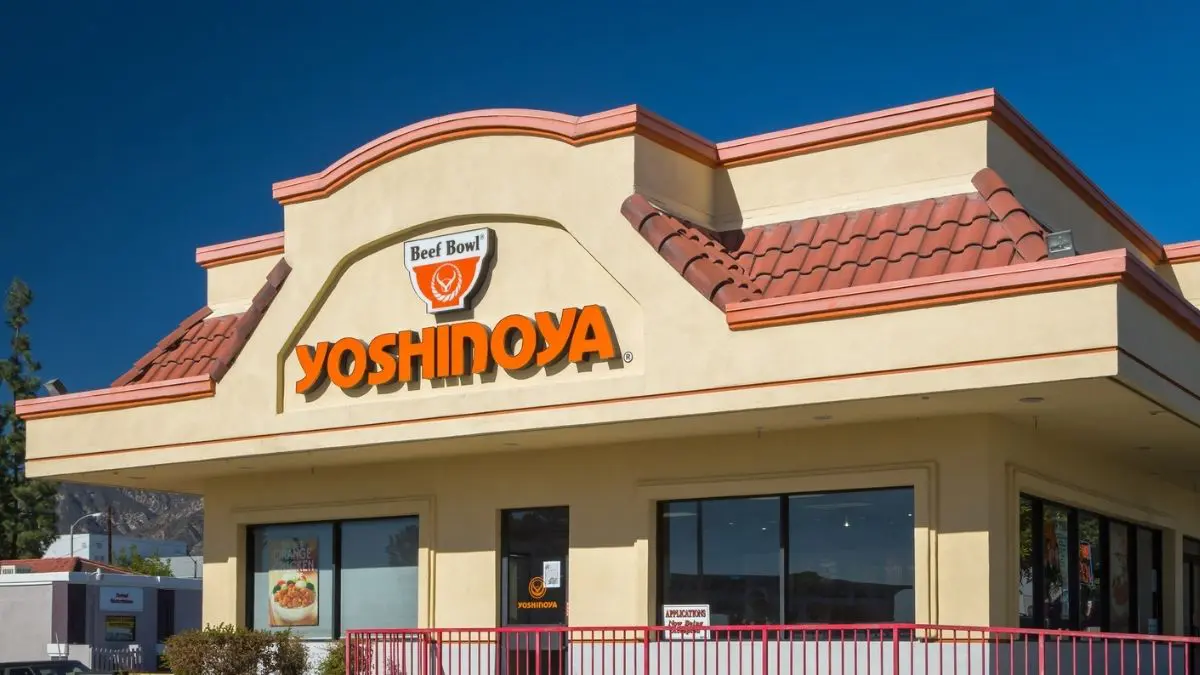
Yoshinoya is a Japanese fast-food chain built around gyudon, the beef bowl. Its own Our Story page says: “From the time we opened our first restaurant in 1899 in Tokyo, Japan, we’ve been cooking our freshly prepared rice bowls to perfection, using quality ingredients, served at an affordable price, with a friendly smile”, and “Today, there are more than 2,000 Yoshinoya locations worldwide, serving more than 500,000 delicious bowls daily.” It also publishes a detail worth knowing: “There’s not a single microwave in our kitchen. That’s because all our bowls are cooked right here by real cooks.”
Answer: Yoshinoya marks nothing on its menu as vegan or vegetarian — neither word appears on its menu or nutrition pages — but it does publish a full nutrition table with a per-item Allergens column, and that column rules several things out that this page used to leave unsaid. There is no plant protein option at all.
Corrections: what this page got wrong
- “Coleslaw” and “Potatoes” were listed as vegan combo-bowl options with full nutrition figures. Neither exists any more. There is no row for either in Yoshinoya’s current nutrition table and no such item on the menu. Both have been removed, along with the “Allergens: wheat, gluten” line attached to the potatoes, which no longer has a source.
- “Sierra Mist” was listed under drinks. Sierra Mist is gone — it returns zero matches on Yoshinoya’s nutrition page. It has been replaced with what Yoshinoya actually publishes: Starry, in three sizes (Bottle 240 cal, Regular 135 cal, Large 195 cal).
- “It doesn’t offer traditional dishes like tempura, sushi, or harumaki.” Contradicted twice. Yoshinoya currently sells Shrimp Tempura (allergens: Crustacean Shellfish, Fish, Soy, Wheat), and it sells Spring Rolls — which are harumaki, as this page itself said two sections later.
- “Dessert choices are not available at this restaurant.” Contradicted by the same nutrition page the article’s numbers came from, which has a Desserts section (Junior’s cheesecakes, cheesecake, chocolate chip cookie), and by the menu’s Sweets tab.
- “Brown Rice — Trans Fat (g): 73.” A garbled figure from a misread of the table. Yoshinoya’s Brown Rice row has 0 trans fat. Deleted rather than adjusted.
- “The sauces used in steamed vegetable rice bowls are vegan.” Unsourced. Yoshinoya publishes no ingredient statement for any sauce and never uses the word “vegan”. The allergen column shows no milk, egg or fish for Teriyaki Sauce or the Soy Sauce Packet, which is a different and weaker claim.
- “Steamed Vegetable Rice Bowl” and “Steamed Vegetables” as dish names. Neither is on the current menu. What exists is a bowl builder — “Each Base comes with Veggies” — plus a Regular Veggie Bowl row on the nutrition sheet (468.8 cal, allergens blank) and a Sides → Veggies row (35 cal, allergens blank). The names have been corrected.
Roughly 900 words recommending six other Japanese restaurants (Shizen, Shojin, Tane, Kajitsu, Red White Japanese Vegan, Cha-Ya), with specific dish lists for each, have been removed. None of it was sourced, and one list presented “Spicy Baked Scallop Roll” and “spicy tuna crispy rice” as vegan dishes without saying they were plant-based versions.
What Yoshinoya publishes — and the one thing it cannot tell you
Yoshinoya’s nutrition page is a plain HTML table, item by item, with a free-text Allergens column. That is better than most chains this size manage. It does not publish ingredient statements, and the words “vegan” and “vegetarian” appear zero times on both the nutrition page and the menu page.
The limit is important. An allergen column lists allergens. It has no column for meat, fish stock or honey, none of which are US allergens. Yoshinoya’s own Crispy Gyoza proves the point: its allergens read “Soy, Wheat”, and its menu description reads “Japanese dumplings filled with pork, ginger, garlic, and green onions.” Nothing animal shows in the allergen cell because pork is not an allergen.
There is a second trap on this sheet. Three Junior’s cheesecake rows have a blank allergens cell while the generic “Cheesecake” row directly beneath declares Eggs, Milk, Soy and Wheat. A blank cell on a cheesecake is a data gap, not an absence. Several dessert rows say so outright: “*Please ask purchasing for allergens.” So a blank allergen cell on this table means “nothing declared”, not “nothing present”.
The cross-contact statement is the most useful sentence on the page, and this article never quoted it. Verbatim:
“Some ingredients may come into contact with common allergens, including wheat, peanuts, soy, tree nuts, milk, eggs, fish and shellfish. Although efforts are made to avoid cross-contact of allergens, Yoshinoya does not guarantee that cross-contact with allergens will not occur. Before placing your order, please inform your server if you or anyone in your party has a food allergy.”
And on portions: “Nutrition information is based on bowls prepared to standard recipe with steamed white rice and mixed veggies (if applicable)… Food servings may have a slight variance each time you visit, please expect these values to be within 10% +/- of your actual meal.”
Bases: one of the four declares shellfish
This is the single most important thing on the page for anyone building their own bowl, and the old version never mentioned it.
- White Rice — 410 cal (large), allergens blank. Menu: “Award-winning steamed white rice.”
- Brown Rice — 350 cal (large), allergens blank. Menu: “Whole grain, fiber-rich brown rice.”
- Vegetables (listed as Mixed Veggies on the nutrition sheet) — 40 cal, allergens blank. Menu: “Nutrient-rich broccoli, cauliflower, carrots, and green cabbage.”
- Japanese Udon Noodles — allergens: Soy, wheat, SHELLFISH. One of only four bases declares shellfish.
The rice and vegetable bases declare no allergens. That is not the same as being confirmed vegan — Yoshinoya publishes no ingredient statement and no cooking method for any of them — but it is what the brand says.
Proteins: there is no plant option
All six items on the current Choose Your Protein tab are animal: Teriyaki Grilled Chicken, Habanero Grilled Chicken, Original Gyudon Beef, Tokyo Fried Chicken, Teriyaki Grilled Ribeye, Teriyaki Grilled Salmon. There is no tofu, no seitan and no meat substitute of any kind. A vegan order at Yoshinoya is a base and sides, nothing more.
Snacks and sides
- Spring Rolls — 280 cal (2 pc) / 560 cal (4 pc), allergens: Soy, Wheat. Yoshinoya’s own description: “Packed with green cabbage, carrots, green beans, and mushrooms. Comes with a sweet and sour dipping sauce.” No milk, egg or fish declared, and the description names only vegetables — the strongest case on this menu. It is still not confirmed vegan: there is no ingredient statement, and the wrapper and the fryer are undocumented. Yoshinoya also fries Shrimp Tempura, Tokyo Fried Chicken and Crispy Gyoza, and publishes no shared-fryer statement. The fryer is the specific question to ask.
- Edamame — the nutrition sheet lists Salted Edamame at 119 cal (Soy, Wheat); the menu lists Sweet & Spicy Edamame at 210 cal. The two documents use different names and different numbers; do not treat them as the same item.
- Veggies (side) — 35 cal, allergens blank.
- Crispy Gyoza — Soy, Wheat, but filled with pork. See above.
- Blount Clam Chowder — Fish (cod, pollock), Milk and Wheat; may contain crustacean shellfish.
Sauces and add-ons — several declare fish or egg
- Teriyaki Sauce — Soy, Wheat
- Soy Sauce Packet — Soy, Wheat
- Gyoza Sauce — Soy, Wheat
- Tempura Sauce — Fish (tuna), Soy, Wheat
- Hanabi Mayo — Soy, Wheat, Eggs
- Chili Crisp — Soy, Sesame
- Beef Broth — Soy, Wheat, contains MSG. It is listed among the sauces, so it is easy to add by mistake.
- Sriracha Sauce Packet, Shichimi Seasoning, Ginger Packet, Crispy Onions — allergens blank on all four.
Teriyaki and soy sauce declare no milk, egg or fish. Again: that is not a vegan statement, and an allergen column cannot exclude honey or fish extract. Yoshinoya publishes no ingredient list for any of them.
Drinks
The published line-up is Pepsi-family: Pepsi, Diet Pepsi, Pepsi Zero, Wild Cherry Pepsi, Mountain Dew, Starry, Brisk raspberry iced tea, Tropicana (apple juice, fruit punch, pink lemonade) and Dole strawberry lemonade. All carry blank allergen cells. As above, blank means nothing declared, not verified.
What a vegan order actually looks like
On Yoshinoya’s published data, the honest position is: nothing here is confirmed vegan, because Yoshinoya never uses the word and never publishes an ingredient list. What can be said is which items declare nothing animal — a rice or vegetable base with veggies, spring rolls, edamame, and a few zero-allergen add-ons — and which items are ruled out because Yoshinoya declares milk, egg, fish or shellfish, or names meat in the description.
Before ordering, the two questions worth asking are the fryer (for spring rolls and edamame) and whether a Regular Veggie Bowl can be ordered without a protein at your location — the bowl builder’s copy says “One regular sized protein and veggies”, while the nutrition sheet carries a standalone Regular Veggie Bowl row.
One last note: Yoshinoya’s site carries a banner in its own HTML reading “This Website is in Public Beta Mode”. The nutrition page and the menu page also disagree on several item names and calorie figures. Where they differ, the nutrition table is the one with the allergen data.
Sources
All fetched 31 July 2026: yoshinoyaamerica.com/nutrition (HTML table, 205 rows, each item’s allergen cell read from its own row); yoshinoyaamerica.com/our-menu; yoshinoyaamerica.com/our-story. No vegan blog, listicle or aggregator was used.